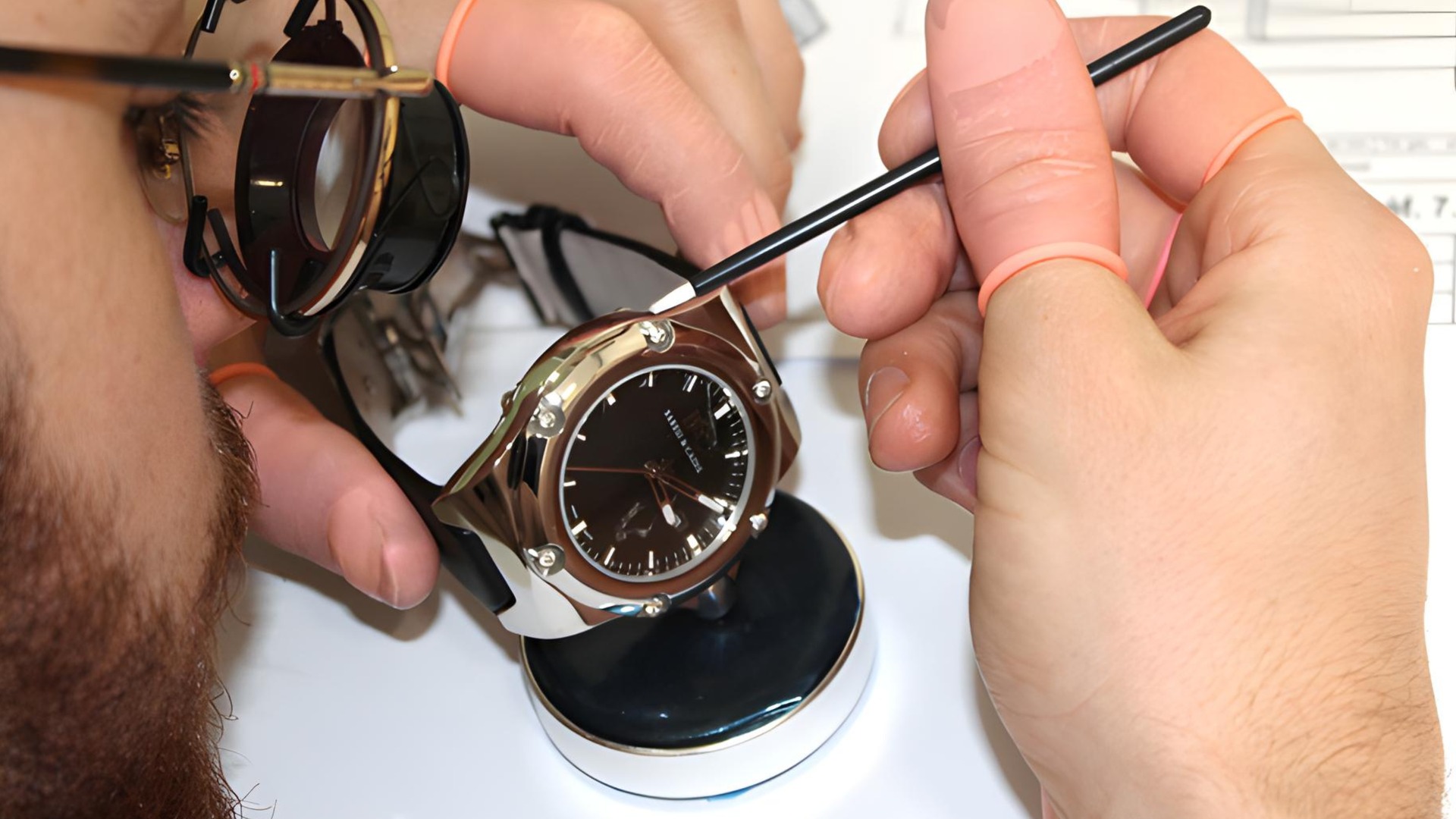
A watchmaker examining a Baresi & Caine timepiece through a loupe
The Journal · 002

How to Commission a Bespoke Watch

How a one-of-one watch is conceived, designed and made.

The Definition

What Does Bespoke Actually Mean?

In watchmaking, the word bespoke is used loosely. For some it means a choice of strap or dial colour. For others it means a personal engraving on a case that is otherwise identical to many others.

A genuinely bespoke watch is different. It is designed for one person, around their ideas, and made once. There is no catalogue to select from and no standard specification to adjust. The watch begins as a conversation and ends as an object that belongs to its owner alone.

This guide explains how commissioning a bespoke watch works: the stages, the decisions you will make, the questions worth asking any watchmaker, and what to expect along the way.

The Process

Step One: The Conversation

Every commission starts with a conversation, not a product list.

A good atelier will want to understand the person before the watch. What should it represent? Is there an achievement, a place, a person or a passion behind it? Inspiration can come from anywhere: architecture, automotive design, art, a significant date or a moment worth remembering.

You do not need a finished design, and you do not need technical knowledge. Some clients arrive with a precise vision. Others are drawn to a particular form or material and let the idea develop. At Baresi & Caine, a commission can begin entirely from your own idea, or from an existing design in The Archive, used as a starting point rather than a finished product.

The Process

Step Two: Materials and Details

Once the direction is clear, the choices become tangible. These typically include:

  • the case metal, from platinum to rose or yellow gold
  • the dial, including natural stones such as marble or onyx
  • gemstones and diamonds, discreet or central to the design
  • the strap, its material and colour
  • engraving and personal details, such as initials, dates or symbols
  • the movement, from an automatic mechanical calibre to more complicated expressions such as a tourbillon

Material choices change character. A Carrara marble dial feels entirely different from Nero Portoro. Platinum sits differently on the wrist from gold. And not every stone suits a watch: a material must first be assessed for the tolerances watchmaking demands.

The best commissions treat each decision as part of the whole. Nothing is chosen simply because it can be.

The Process

Step Three: Design

Next, the ideas are developed into a design. Concepts are usually presented privately and refined together: proportions, materials, colours and details evolve until the watch feels resolved.

This is the moment to be honest about what you like and what you do not. A good designer balances creativity with the discipline of fine watchmaking, and will tell you when something will not work mechanically.

Only when you and the atelier are both satisfied should the commission move into manufacture.

The Process

Step Four: Making the Watch

Manufacture is where the design becomes a mechanical object. Components are prepared, machined, finished and assembled, and surfaces are polished by hand. Our page on Swiss craftsmanship explains what that finishing involves.

Many clients assume this stage is a black box. It does not have to be. At Baresi & Caine, clients receive private updates throughout, from individual components to machining, finishing and assembly, and may be invited to our atelier in La Chaux-de-Fonds to see components from their own commission and meet the people making it.

The Process

Step Five: Completion and Delivery

As the watch nears completion, the movement, dial, case, hands, gemstones, strap and personal details come together. It then goes through final assembly, testing and quality control before it is considered complete.

The handover matters too. We believe the end of such a personal journey should not be reduced to a delivery, so each commission is presented to its owner personally.

Before You Commit

Questions to Ask Any Watchmaker

Whoever you choose, these questions help you understand what you are really commissioning:

  1. Is the watch genuinely made once, or is it a variation on a standard model?
  2. Who designs it, and who makes it? Where is each stage carried out?
  3. What can be changed, and what cannot? Ask which parts of the specification are truly open.
  4. How will the price be set? Expect a clear proposal once the design direction is agreed, and ask what is included.
  5. How long will it take, and how will you be kept informed? Complex designs and specialist components take time, so be wary of fixed promises made before the design exists.
  6. What happens after delivery? Ask about warranty, servicing and restoration.
Before You Commit

What to Expect on Cost and Time

There is no universal price or production time for a one-of-one watch, because both depend on the movement, materials, gemstones, complexity and finishing involved. Once the direction of a commission has been agreed, a reputable atelier should be able to give you a clear proposal and an anticipated timeframe, and keep you updated as the work progresses. A deposit is normally required before work begins.

At Baresi & Caine, the details are shared privately before a commission is confirmed.

The Difference

Why Commission Rather Than Buy?

A catalogue watch, however fine, is made for many people. A commissioned watch is made for one. It can carry a story only its owner knows, and the owner is part of its creation.

It also carries a different kind of rarity. A limited edition is rare because few were made. A watch created once, for one person, and never repeated, is rare in a different way.

The Next Step

Begin With a Conversation

If you are considering a bespoke watch, the first step is simply to talk. Read more about our atelier and how every commission takes shape, explore our private commissions, look through the answers in our Questions & Answers, or begin a conversation with the atelier.